
By Digixfly | IT & MSP Digital Growth
Let’s be honest for a second.
If you run a managed services business, you already know how brutally crowded the space is. You’re not just competing with the MSP across town you’re competing with hundreds of providers who offer nearly identical services, speak nearly identical language, and target nearly identical clients.
Microsoft’s partner network alone has over 640,000 vendors, MSPs, and distributors. Six hundred and forty thousand. Let that sink in.
So when every provider is talking about “proactive monitoring,” “24/7 support,” and “scalable cloud solutions,” how do you make your business the one a prospect actually calls?
The answer isn’t doing more of the same. It’s doing the right things better than most MSPs are willing to.
This post isn’t your typical “just do SEO and post on LinkedIn” breakdown. Those articles are everywhere, and frankly, they don’t help you generate a single real lead. What follows is a practical look at what actually works — and why most MSPs are leaving serious business on the table by ignoring it.
Stop Chasing the Wrong Keywords
Search engine optimization is non-negotiable for any MSP trying to grow online. But most MSPs approach it the wrong way they go after the obvious, high-volume terms and then wonder why their content isn’t ranking or converting.
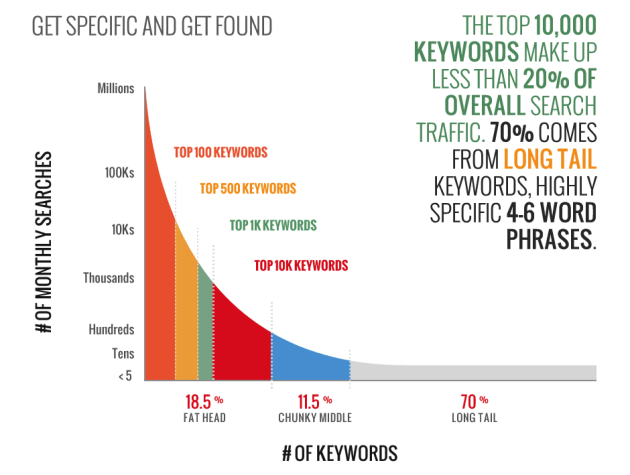
Here’s the thing about short-tail keywords like “IT services” or “managed IT support”: yes, they get tens of thousands of searches per month. But they’re also where every well-funded competitor is throwing their budget. Ranking for those terms takes years, costs a fortune in paid ads ($14 or more per click, in many cases), and often brings in traffic that doesn’t convert anyway.
The smarter play especially if you’re not sitting on a massive marketing budget is long-tail keywords.
Long-tail keywords are the longer, more specific search phrases that reflect actual problems your prospects are trying to solve. Something like “how to protect my business from ransomware” or “managed IT services for small law firms” has far less competition, lower cost-per-click, and most importantly it attracts someone who’s already thinking about a problem you can solve.
Here’s the counterintuitive truth: 70% of all Google searches are long-tail. The short, high-volume terms that everyone fights over? They represent only about 20% of actual search traffic. You’re fighting the hardest battle for the smallest slice of the pie.
Targeting long-tail keywords doesn’t mean settling for low-quality traffic. It means being strategic about who you want reading your content and making sure you show up exactly when they need you.
Content That Speaks to Pain, Not Just Process
Once you’ve identified the right long-tail keywords, the content you build around them has to do real work.
This is where most MSPs drop the ball. They produce blog posts that read like technical documentation — accurate, maybe, but completely disconnected from what a stressed IT manager or business owner is actually feeling when they type that search query at 11pm.
Your content needs to meet readers where they are emotionally, not just informationally.
Someone searching for “types of ransomware attacks” isn’t necessarily ready to buy anything. They might be a VP of Operations who just got a sketchy email and is now quietly panicking. They’re not looking for a pitch. They’re looking for clarity, reassurance, and a sense of who knows what they’re talking about in this space.
If your content delivers that — genuinely, without the hard sell you’ve just made a first impression that most competitors never get to make. And when that same person is ready to evaluate MSP partners three months later? You’re already in their head.
That said, search intent matters enormously here. Not every long-tail keyword that looks relevant actually connects to your buyer. Some searches come from students writing research papers. Some come from competitors doing their own research. A good MSP SEO strategy involves understanding not just the keyword, but the person behind it their role, their urgency, and their actual next step.
The profiles you want to be writing for: IT Directors, Operations Managers, Business Owners, VPs of Finance who’ve just had a security incident. Not everyone who Googles a tech term.
Once you know you’re writing for the right people, invest in quality. Not fluff. Not keyword-stuffed paragraphs. Actual, useful, well-researched content that leaves the reader better informed than they were before they found you.
Short-Tail Keywords Still Have a Place – Just Not the One You Think
This isn’t an argument to ignore short-tail keywords entirely. They matter just differently.
For your core service pages (the ones describing what you actually do), you do want to target broader terms. But here’s where MSPs often trip over themselves: they write those pages for other IT people instead of for the buyers who actually sign contracts.
Your CEO prospect doesn’t know what “SECaaS” means. They’ve never heard of “endpoint detection and response.” But they absolutely understand “protecting your business from a data breach” or “making sure your team can work without unexpected downtime.”
Write your service pages for the buyer, not the technician. Translate the technical capability into the business outcome. That’s what converts.
Inbound Alone Won’t Cut It – You Need Both Directions
Here’s something most content-heavy marketing guides won’t tell you: inbound marketing has a ceiling.
SEO takes time. Even great content can take six to twelve months to gain real traction. And in a market with well-funded competitors, there will always be someone with more content, more backlinks, and a bigger ad budget than you.
That’s why the MSPs with the most consistent lead flow don’t rely on inbound alone. They pair it with outbound specifically, account-based marketing (ABM).
ABM flips the traditional approach. Instead of casting a wide net and hoping the right people find you, you identify your ideal clients specifically by company size, industry, geography, technology stack and go directly to them with tailored outreach.
The real power comes from combining the two. Your inbound content becomes the fuel for your outbound conversations. You’re not cold-calling with nothing to offer you’re reaching out to a targeted prospect and backing it with a piece of content that directly speaks to their exact situation.
When you run both channels together, the impact compounds. Separately, each approach gets you some results. Together, they create a pipeline that’s genuinely hard to compete with. Our clients at Digixfly who’ve implemented this hybrid approach consistently see two to three times the lead volume compared to those running either channel in isolation.
Niche Down – Seriously, Pick a Lane
One of the most uncomfortable pieces of advice in MSP marketing is also the most consistently effective: stop trying to serve everyone.
The instinct to stay broad makes sense on the surface. More market = more opportunity, right? In practice, it usually means you’re a generic option in a sea of generic options, and no one has a compelling reason to choose you over anyone else.
The MSPs that dominate their local and regional markets almost always have a defined niche. Not “we serve businesses of all sizes across all industries.” Something more like: “We provide managed IT and cybersecurity services to healthcare practices with under 75 employees in the Greater Toronto area.”
That specificity does several things at once. It makes your SEO efforts dramatically more effective because you’re competing for targeted terms instead of impossibly broad ones. It makes your content more relevant because you’re speaking directly to a specific reader’s world. And it makes your sales conversations shorter because prospects immediately feel like you understand their business.
The big generalist MSPs aren’t fighting for the niche. That’s where you can actually win.
Respect the Sales Cycle and Build Your Pipeline Accordingly
Here’s the reality of B2B IT sales: it’s slow. Not a little slow — genuinely, frustratingly slow. It’s not unusual for a prospect to move from first contact to signed contract over six, nine, or even twelve months.
This has real implications for how you approach marketing.
If you’re only focused on the people who are ready to buy right now, you’re ignoring the vast majority of your market. Most of your future clients are sitting somewhere earlier in the journey — aware they have a problem, maybe starting to research options, not yet ready to get on a call.
Your marketing needs to work at every stage of that journey. Top-of-funnel content builds awareness and trust. Mid-funnel content — case studies, comparison guides, solution breakdowns — helps prospects evaluate their options. Bottom-funnel content and outreach closes the gap.
The MSPs with predictable revenue streams are the ones who built this pipeline intentionally and consistently, even during the months when it felt like nothing was converting. Check out our real client results to see what consistent pipeline-building actually produces over time.
The Hard Part Isn’t Knowing What to Do — It’s Doing It Well
Everything above is knowable. The challenge is execution.
Getting the keyword strategy right takes real expertise. Building content that genuinely ranks and converts takes time and iteration. Running ABM campaigns alongside inbound requires coordination and experience. Testing what offers work for which prospects — a security audit versus a free checklist versus a discovery call — is a months-long process of learning what actually moves the needle for your specific market.
Starting from scratch means spending the first year building capacity when you should be generating leads.
That’s why working with a team that already knows the MSP space — the buyer psychology, the technical language barriers, the long sales cycles, the compliance angles — can compress your timeline significantly.
At Digixfly, we build digital growth systems specifically for MSPs and IT firms. From search engine optimization and pay-per-click management to content strategy and conversion optimization, we’ve built the process so you can focus on delivering great service while we focus on filling your pipeline.
If you want to see what that looks like in practice, get your free SEO checklist or reach out directly and let’s talk about where your MSP stands right now.
Digixfly is a digital marketing partner for IT firms and managed service providers. We help MSPs build visible, credible, and conversion-ready online presences. Learn more about us or explore our recent work.