
The Architecture of the Google Maps 3-Pack Algorithm in 2026
When a prospective client or patient searches on their mobile device for “car accident lawyer near me”, “emergency plumber in [City]”, or “best cosmetic dentist near me”, Google displays the localized 3-Pack map view above all traditional organic search results.
Capturing one of these 3 coveted positions is the single most valuable digital marketing achievement for any local business. It generates high-intent incoming phone calls, booked appointments, and immediate inquiries without paying $50 to $350+ for every single click on Google Ads.
However, Google’s local ranking algorithm is not a simple game of getting the most reviews or stuffing keywords into your business name. In 2026, Google evaluates three core algorithmic pillars—Relevance, Prominence, and Proximity—powered by entity graphs, real-time citation validation, and machine-learning search intent matching.
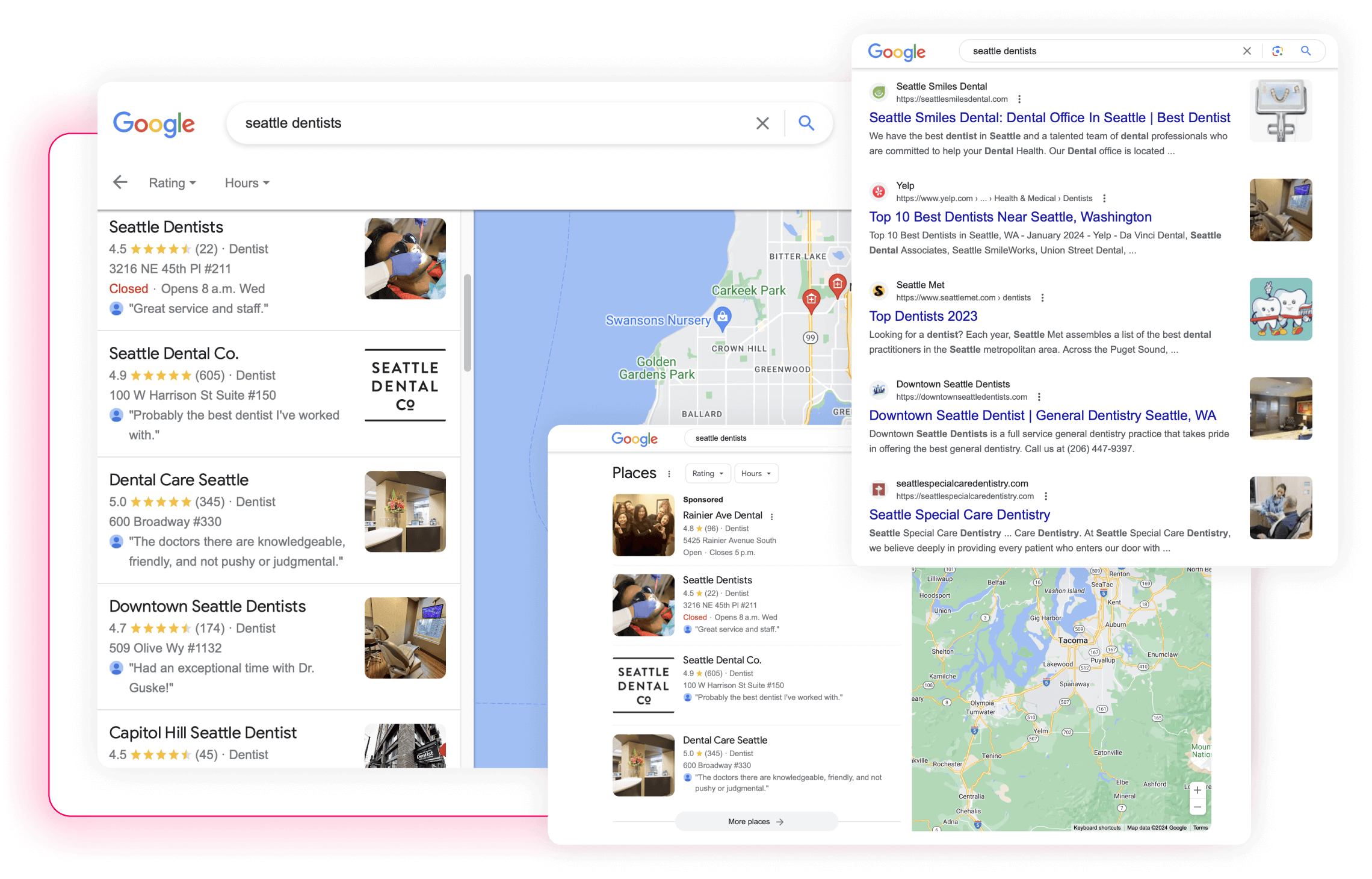
Pillar 1: Relevance & Primary Category Selection (36.2% Weight)
Relevance measures how closely your Google Business Profile (GBP) and connected website match what a user is actively searching for.
1. Primary Category Optimization
Your Primary Category is the single most influential on-profile ranking factor. Google allows you to select one primary category and up to nine secondary categories. If your primary category is misaligned with the dominant search intent in your metro area, your business will fail to rank regardless of how many reviews you possess.
- Law Firms: Selecting “Personal Injury Attorney” vs generic “Law Firm” determines whether you surface for lucrative motor vehicle accident queries. (See our specialized Local SEO for Lawyers blueprint).
- Dental Practices: Selecting “Dental Clinic” vs “Cosmetic Dentist” vs “Dental Implants Periodontist” directly dictates your visibility for high-ticket full-arch restorations. (See our Local SEO for Dentists guide).
- Medical Spas: Selecting “Medical Spa” vs “Day Spa” separates medical-grade Botox and laser treatments from basic facial massage searches. (Explore our Med Spa SEO Services).
2. Custom Services Menu Architecture
Google’s semantic engine crawls the custom services listed within your Google Business Profile. By populating 30 to 50 verified high-intent service terms with thorough localized descriptions, you provide the algorithmic keywords Google uses to bold search snippets directly inside the map pack (e.g., “Their website mentions car accident settlements”).
Pillar 2: Prominence, Review Velocity & Entity Trust (24.8% Weight)
Prominence reflects how well-known and reputable your business is across the web, derived from customer reviews, editorial backlinks, and directory citations.
1. Review Velocity vs. Total Review Count
A common myth in local SEO is that having 500 reviews guarantees a #1 ranking. In 2026, Google heavily prioritizes Review Velocity (the consistency and frequency of incoming reviews) over lifetime totals.
A practice that steadily receives 6 to 10 authentic, keyword-rich 5-star reviews every single month will consistently outrank an older competitor sitting on 300 dormant reviews with zero new customer feedback in the last 90 days.
2. Keyword-Rich Customer Sentiments
When satisfied clients mention specific treatments, practice areas, or geographic landmarks in their Google reviews (e.g., “Dr. Jenkins did an incredible job on my dental implants in North Dallas”), Google indexes these phrases as first-party entity validation.
3. The Role of Review Filtering & Interception
Maintaining a 4.8 to 4.9-star average is critical for click-through rate conversion. Utilizing a Review Filter Gate ensures positive customers are routed directly to Google Maps while privately resolving customer dissatisfaction before a public 1-star review is posted.
Pillar 3: Proximity & Physical Location Signals (19.4% Weight)
Proximity measures the physical distance between the searcher’s real-time mobile coordinates and your verified business location.
While you cannot move your physical office to follow every mobile user across a metro area, you can dramatically expand your effective ranking radius through localized on-page content architecture:
Verified primary address anchored in downtown or central business district.
Dedicated 1,500+ word authority landing pages for surrounding suburbs and municipalities.
By building out dedicated, 1,500+ word “Zipper Matrix” landing pages for every surrounding suburb and municipality, your website establishes topical relevance across adjacent zip codes, allowing your 3-Pack pin to outrank closer but weaker competitors.
Pillar 4: NAP Citation Consistency & Schema Infrastructure (19.6% Weight)
Google constantly cross-references your physical Name, Address, and Phone number (NAP) across Tier-1 data aggregators like Data Axle, Neustar Localeze, Foursquare, and industry hubs.
Embedding valid LocalBusiness, LegalService, or Dentist JSON-LD structured data into your website code provides explicit entity confirmation to Google's search crawlers and conversational AI search engines (ChatGPT, Perplexity, Gemini).
Embedding valid LocalBusiness, LegalService, or Dentist JSON-LD schema into your website code provides explicit entity confirmation to Google’s crawler and conversational AI search engines (ChatGPT, Perplexity, Gemini).
The Complete 2026 Local SEO Action Plan
To claim and defend the #1 position on Google Maps in your target city:
- Audit Your Primary Category: Match the exact category used by the market leader in your metro area.
- Implement Review Velocity Automation: Secure 5 to 8 new authentic reviews every month with specific service mentions.
- Cleanse Data Aggregator NAP Records: Eliminate duplicate, legacy, or misspelled address records.
- Deploy Localized Schema Markup: Feed structured JSON-LD entities directly to Google and AI search engines.
- Scale Transparent Growth Retainers: Work with an executive partner offering transparent month-to-month retainers. (Explore our Local SEO Pricing & Packages).
Ready to inspect your local market positioning? Contact our search engineers to schedule a confidential local market discovery session.